
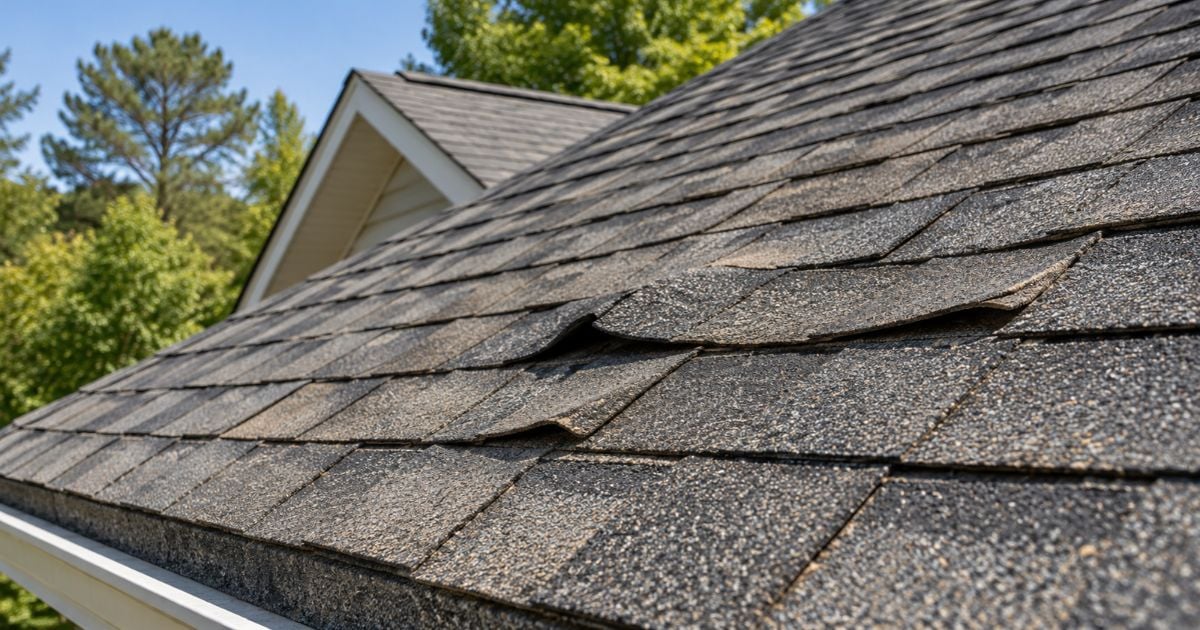
Asphalt shingles are designed to form a protective roof covering that helps direct rainwater away from a home. Over time, however, homeowners may notice shingle edges lifting, corners curling, or unusual waves appearing across their roof. These changes can indicate deterioration, installation problems, or conditions affecting the materials beneath the shingles.
For homeowners in North Georgia, curling or buckling roof shingles deserve attention because the underlying cause is not always visible from the ground. While some problems affect only a small area, others may indicate broader roofing issues.
Understanding the difference between curling and buckling can help homeowners recognize warning signs and make informed repair decisions. This guide explains common causes, potential consequences, professional repair options, and ways to reduce the likelihood of future problems.
Understanding Curling and Buckling Roof Shingles
Curling and buckling may appear similar from a distance, but they describe different roofing conditions. Identifying the type of distortion helps determine what may be happening to the roof.
Curling typically affects shingle edges or corners, while buckling creates raised or uneven areas across the roof surface. Both conditions may result from aging, installation issues, or underlying roofing problems, making proper assessment important.
What Are Curling Roof Shingles?
Curling occurs when the edges or corners of asphalt shingles begin lifting away from their normal flat position. Some shingles curl upward along their edges, while others develop raised corners that create an uneven appearance.
Curling can develop as roofing materials age or experience prolonged environmental exposure. Installation conditions and moisture-related problems may also contribute.
What Are Buckling Roof Shingles?
Buckling usually appears as raised ridges, waves, or irregular distortions across the roof surface. Unlike curling, which primarily affects shingle edges, buckling often reflects movement or unevenness in materials beneath the shingles.
According to the Asphalt Roofing Manufacturers Association’s technical guidance on buckled shingles, common causes include wrinkled underlayment and movement in wood roof decking.
Recognizing these differences helps homeowners understand why professional evaluation may be necessary before choosing a repair.
Common Causes of Curling Roof Shingles
Several factors can contribute to curling asphalt shingles. The underlying cause depends on the roof’s age, installation quality, environmental exposure, and overall condition.
Over time, these factors can affect shingle flexibility and performance, causing edges or corners to lift. Understanding the potential causes helps homeowners identify warning signs and determine when professional attention may be needed.
Natural Aging and Material Deterioration
Asphalt shingles gradually change as they experience sunlight, temperature fluctuations, rain, and other environmental conditions. Over time, their materials can lose flexibility and become more vulnerable to deformation.
Aging shingles may develop lifted edges, cracking, or surface deterioration. However, curling alone cannot establish the remaining service life of an entire roof.
A professional evaluation can help determine whether deterioration is localized or widespread.
Inadequate Attic Ventilation
Attic ventilation helps manage moisture and temperature conditions beneath certain roofing systems. When ventilation is insufficient, moisture accumulation may affect roof decking and contribute to roofing problems.
Poor ventilation should not automatically be assumed to cause every curling shingle. Its effects depend on attic construction, insulation, airflow, and other conditions.
A professional inspection can help determine whether ventilation problems are contributing to the visible deterioration.
Improper Shingle Installation
Installation mistakes can affect how shingles perform after exposure to changing weather conditions.
Possible issues include:
- Incorrect fastening locations or methods
- Improper alignment or overlapping
- Installation over unsuitable roof surfaces
- Failure to follow manufacturer instructions
- Problems with shingle sealing or attachment
Not every installation defect causes curling, but improper installation can leave shingles more vulnerable to movement, lifting, and weather-related damage.
Wind and Weather Exposure
Strong winds can lift poorly secured shingle edges or damage existing seals. Repeated exposure may worsen shingles that are already deteriorating.
North Georgia homeowners should pay particular attention to newly lifted shingles after severe weather. Visible damage does not always reveal its full extent, making a roof assessment useful when conditions change unexpectedly.
What Causes Roof Shingles to Buckle?
Buckling frequently involves the interaction between shingles, underlayment, and roof decking. Because the source may be underneath the visible roofing material, replacing an individual shingle does not always correct the problem.
Moisture-related movement, improper installation, or uneven underlying materials can contribute to these distortions. Identifying the specific cause helps determine whether localized repairs or more extensive corrective work may be necessary.
Moisture in Roof Decking
Wood roof decking can absorb moisture when exposed during construction or roof replacement. Changes in moisture content may cause decking materials to expand or move.
If this movement creates uneven surfaces, the shingles above may develop visible ridges.
Moisture-related distortion can also occur when ventilation or drying conditions are inadequate.
Wrinkled Roofing Underlayment
Underlayment provides a secondary layer of protection beneath roof shingles, helping shield the roof decking from wind-driven rain and moisture. Certain underlayment materials can absorb moisture or develop wrinkles under unsuitable installation conditions.
These wrinkles may become visible through the shingles, creating raised or uneven areas that affect the roof’s appearance.
The Asphalt Roofing Manufacturers Association’s guidance on roofing underlayment highlights the importance of selecting and installing appropriate underlayment materials. Proper installation helps protect the roof decking and minimize irregularities that could affect the finished roofing surface.
Improper Roof Deck Spacing
Wood decking requires appropriate installation spacing to accommodate normal material movement.
When panels are installed without sufficient space for expansion, moisture-related movement may create pressure between adjacent sections.
This can produce raised areas that become visible through the finished roofing surface.
Fastening and Surface Irregularities
Nails that are not properly seated, uneven decking, or debris trapped beneath shingles may produce localized raised areas.
These problems can resemble more extensive buckling, although their repair requirements may differ.
A roofing professional can investigate the affected location and identify whether the problem is limited to fastening or involves underlying materials.
Why Curling or Buckling Shingles Shouldn’t Be Ignored
Curling and buckling do not automatically mean a roof is leaking. However, visible distortion can indicate conditions that deserve closer attention.
If left unaddressed, these issues may increase the roof’s vulnerability to wind damage, moisture intrusion, and further deterioration. Recognizing potential risks early can help homeowners take appropriate action before problems become more extensive.
Increased Vulnerability to Wind
Raised shingle edges may be more vulnerable to wind movement, particularly when their adhesive seals have deteriorated or failed to bond properly.
Continued exposure can increase the possibility of additional lifting or shingle displacement.
Potential Water Intrusion
Asphalt shingles are intended to overlap and shed water. Damaged, displaced, or improperly sealed shingles may allow wind-driven rain to reach underlying roofing components.
Whether leakage develops depends on the roof’s overall condition, underlayment, flashing, and extent of damage.
Possible Underlying Roof Problems
Buckling may signal decking movement or underlayment irregularities that cannot be corrected by addressing the visible surface alone.
Ignoring the cause can allow existing problems to persist, even when the roof initially appears to remain watertight.
How Professionals Evaluate Damaged Roof Shingles
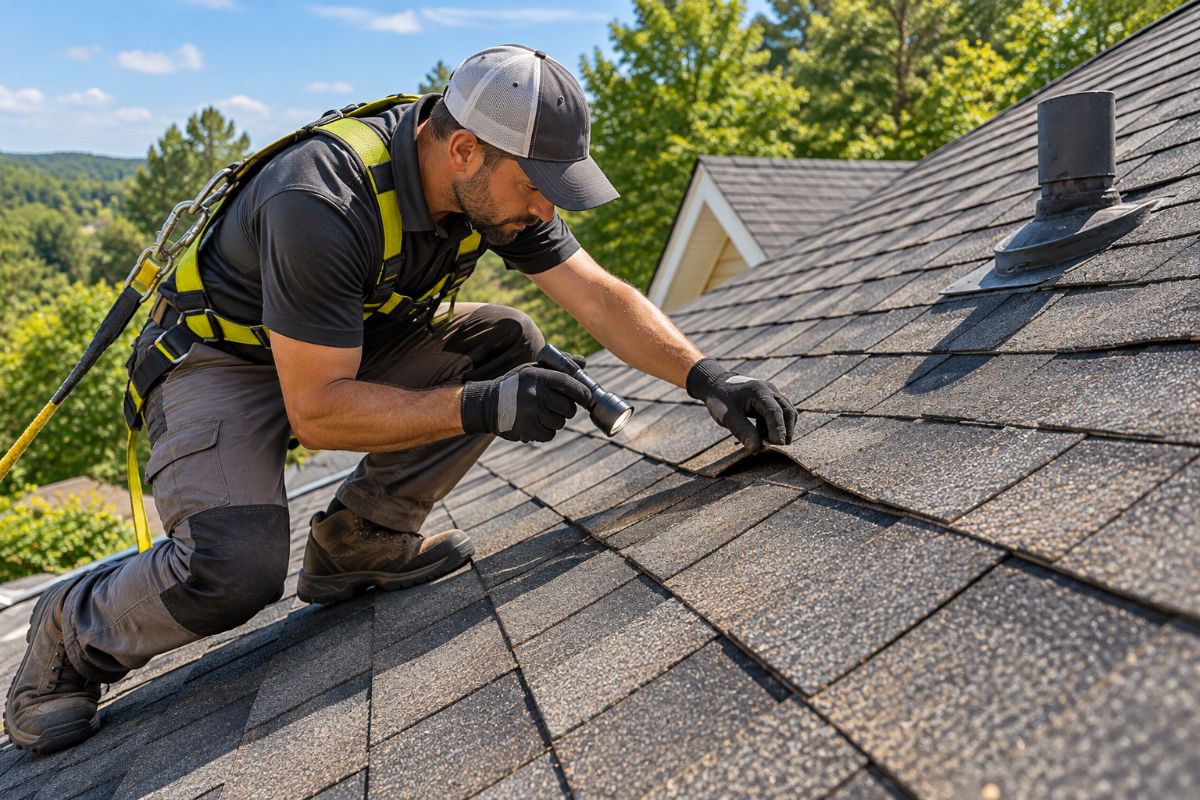
A professional roof inspection helps distinguish cosmetic irregularities from conditions requiring repairs.
During an evaluation, a roofing contractor may examine:
- The location and pattern of curling or buckling
- Shingle attachment and visible deterioration
- Flashing and nearby roof penetrations
- Signs of moisture intrusion
- Accessible roof decking and attic conditions
- Relevant ventilation and installation details
The evaluation should consider whether damage is isolated, repeated across several sections, or associated with an underlying problem.
Division Kangaroof provides residential roof inspection services for homeowners in its North Georgia service area, including assessments of curling, warping, and damaged shingles.
Homeowners should avoid climbing onto damaged roofs to investigate these conditions themselves.
Can Curling or Buckling Roof Shingles Be Repaired?
The appropriate solution depends on the cause, location, extent of damage, and condition of the existing roofing materials.
Minor issues may be resolved through targeted repairs, while widespread deterioration or underlying structural problems may require more extensive work. A professional roof inspection can help identify the appropriate repair or replacement options based on the roof’s condition.
Repairing Isolated Shingle Damage
When damage is limited to a small area, professional repairs may involve replacing affected shingles or correcting localized fastening problems.
Successful repairs depend on surrounding material condition, compatible replacement products, and proper installation.
Division Kangaroof offers residential roof repair services for problems involving damaged, warped, or missing shingles.
Correcting Underlayment or Decking Problems
If buckling originates beneath the shingles, the affected roof covering may need to be removed to access the underlying materials.
Depending on inspection findings, corrective work could involve replacing wrinkled underlayment, addressing damaged decking, or correcting fastening problems.
Simply flattening the visible shingles may not eliminate the cause.
When Roof Replacement May Be Appropriate
Replacement may be considered when deterioration affects substantial portions of the roof, existing materials cannot support dependable repairs, or underlying problems require extensive work.
However, widespread replacement should not be recommended solely because a few shingles have curled.
Homeowners can review Division Kangaroof’s residential roof replacement services when evaluating options for significantly deteriorated roofing systems.
How to Help Prevent Shingle Problems
Not every roofing issue can be prevented, but appropriate installation, maintenance, and timely inspections can help identify conditions that contribute to premature deterioration.
Practical preventive measures include:
- Follow installation requirements: Use roofing materials and installation methods appropriate for the roof.
- Manage attic moisture: Have ventilation and moisture concerns evaluated when warning signs appear.
- Address damaged shingles: Arrange professional attention when shingles become loose, cracked, or displaced.
- Check after severe weather: Look for visible changes from a safe ground-level location.
- Maintain drainage: Keep gutters functioning so rainwater can drain away from roof edges.
These practices cannot guarantee that shingles will never curl or buckle, but they support ongoing roof maintenance.
When Should North Georgia Homeowners Schedule a Roof Inspection?
Homeowners should consider scheduling an inspection when shingle distortion becomes noticeable, spreads across the roof, or appears after severe weather.
Additional warning signs include water stains indoors, missing shingles, visible roofline irregularities, or persistent moisture concerns.
Prompt evaluation can help identify whether the condition requires monitoring, targeted repairs, or more extensive corrective work.
A qualified roofing contractor can also explain whether the visible issue originates in the shingles themselves or another component of the roofing system.
Final Thoughts
Curling or buckling roof shingles can result from aging, installation problems, moisture-related movement, or deterioration beneath the roofing surface. Although the symptoms may look similar, their causes and appropriate solutions can differ substantially.
For North Georgia homeowners, the most useful approach is to identify the underlying issue rather than assume that every distorted shingle requires replacement.
Division Kangaroof provides roofing inspections, repairs, and replacement services to help homeowners evaluate roof conditions and consider suitable next steps. Professional assessment offers a practical starting point when visible shingle changes raise concerns.
Frequently Asked Questions
Are curling roof shingles always a sign of roof failure?
No. Curling indicates a change in shingle condition, but the extent of damage and underlying cause determine whether localized repairs or broader work may be necessary.
Can buckling shingles flatten on their own?
Some moisture-related distortions may change as materials dry. However, persistent buckling can indicate underlayment, decking, or installation problems that require professional evaluation.
Do curling shingles automatically cause roof leaks?
Not necessarily. Curling can increase vulnerability to wind and water intrusion, but leakage depends on shingle attachment, surrounding materials, and other roof conditions.
Should individual curled shingles be replaced?
Replacement may be appropriate when damage is localized and surrounding materials remain serviceable. A roofing professional should evaluate the cause before determining the repair method.
Is it safe to inspect buckling shingles from the roof?
Homeowners should avoid climbing onto potentially damaged roofing surfaces. Visual observations from the ground and a professional roof inspection are safer ways to investigate suspected problems.