
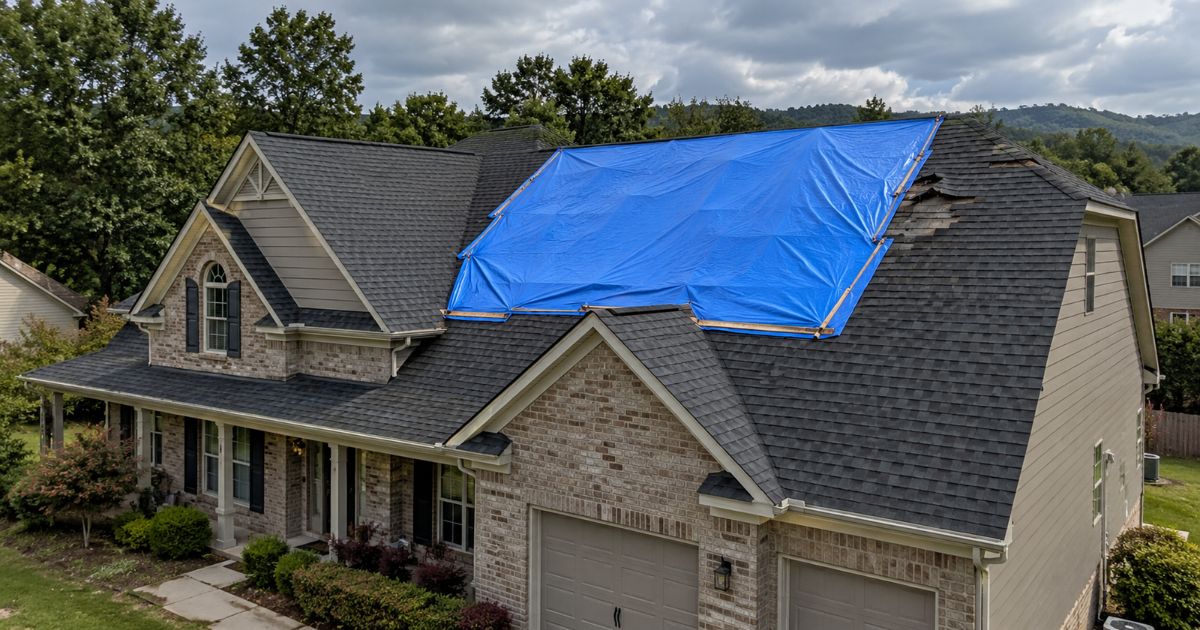
Severe storms can leave residential roofs with missing shingles, damaged flashing, fallen branches, or exposed roofing materials. Even when the damage appears limited, another period of rainfall may allow moisture to enter vulnerable areas. For homeowners in North Georgia, determining whether emergency roof tarping is necessary can be an important part of protecting a home after severe weather.
Emergency roof tarping provides temporary protection while damaged roofing components are assessed and permanent repairs are arranged. However, not every storm-damaged roof requires a tarp, and temporary coverings cannot correct underlying structural problems.
This guide explains when roof tarping may be appropriate, what the process involves, its limitations, and the steps homeowners should consider after storm damage.
Understanding Emergency Roof Tarping
Emergency roof tarping involves placing a temporary, weather-resistant covering over damaged roofing areas to reduce exposure to rain and other environmental conditions. It is generally considered when a roof cannot be permanently repaired immediately.
How Temporary Roof Protection Works
A properly selected and secured tarp can help redirect rainfall away from damaged sections of a roofing system. Its effectiveness depends on the damaged area’s size, roof configuration, weather conditions, and installation quality.
The covering must be positioned and secured appropriately to reduce opportunities for water to enter around its edges. However, tarping does not guarantee a completely watertight roof.
Emergency Tarping vs. Permanent Roof Repair
Tarping is a protective measure rather than a substitute for roof repair. It does not replace missing roofing materials, restore damaged decking, or correct problems with flashing.
Division Kangaroof offers emergency roof tarping services for damaged roofs in its North Georgia service area. The company describes tarping as a temporary solution while existing roofing is protected or permanent repairs are arranged.
When Is Emergency Roof Tarping Necessary?
Whether a roof needs temporary covering depends on the extent of storm damage and the possibility of additional water intrusion. A professional assessment can help identify areas requiring immediate protection.
Missing or Displaced Roof Shingles
Strong winds can loosen, lift, or remove shingles, potentially exposing underlayment or other roofing components. Missing shingles do not automatically mean extensive water damage has occurred, but exposed sections may require protection.
Tarping may be appropriate when several shingles are missing, underlying materials are exposed, or repairs cannot be completed before additional rainfall.
Fallen Trees or Branches
Falling limbs can damage shingles, flashing, decking, and other roofing components. Larger impacts may also compromise structural framing beneath the roof.
When a branch creates an opening or significantly damages the roof covering, temporary protection may be needed after the structure has been evaluated.
Homeowners should avoid approaching unstable trees, damaged structural sections, or nearby electrical lines.
Openings Around Flashing or Roof Penetrations
Storms may damage flashing surrounding chimneys, vents, skylights, and other roof penetrations. These areas require properly installed roofing details to direct water away from vulnerable joints.
If flashing is displaced or roofing materials become exposed, temporary covering may help reduce further moisture intrusion until repairs are possible.
Active Leaks After Severe Weather
Water dripping from ceilings or appearing around interior walls can indicate a roofing problem, although the entry point may be different from where water becomes visible indoors.
A contractor may recommend tarping when the affected roof area can be identified and permanent repairs must be delayed.
Not all leaks require a tarp; some may be addressed through targeted repairs.
Why Temporary Roof Protection Matters
Storm damage can affect more than the visible roof covering. Temporary measures may help limit additional exposure while homeowners arrange inspections and repairs.
When roofing materials are damaged or displaced, vulnerable areas may become exposed to rain and wind, increasing the possibility of moisture intrusion. Properly installed temporary protection can help reduce further damage and provide homeowners with time to plan necessary repairs.
Reducing Further Water Intrusion
Missing roofing materials or storm-created openings can allow rainwater to reach insulation, ceilings, and interior finishes.
An appropriately installed tarp may reduce the amount of water entering through an exposed area. Nevertheless, damaged roofing components and existing moisture problems still require attention.
Protecting Interior Materials
When water penetrates a roof, it may affect drywall, insulation, flooring, and other building materials. Continued moisture exposure can make restoration more complicated.
Temporary covering can help protect vulnerable interior areas, but it cannot dry materials that have already become wet.
Allowing Time for Repair Planning
Permanent roof repairs may require inspections, suitable materials, safe working conditions, and coordination with insurance providers.
Tarping can provide an interim protective measure while homeowners determine whether localized repairs or more extensive roofing work is appropriate.
What Should Homeowners Do Immediately After Storm Damage?
Safety should come before property inspections or temporary repairs. Roof damage can involve unstable structures, slippery surfaces, electrical hazards, and falling debris.
Once the storm has passed and conditions are safe, homeowners should assess visible damage from the ground and look for signs of water intrusion indoors. Taking appropriate precautions, documenting damage, and contacting a qualified roofing professional can help prevent additional risks and guide the next steps.
Check for Immediate Safety Hazards
Homeowners should remain away from damaged roofing sections, downed power lines, and unstable trees. If structural collapse appears possible, leave the affected area and contact emergency services.
The Occupational Safety and Health Administration’s roof inspection, tarping, and repair safety guidance identifies falls, electrical exposure, and unstable roofing materials as important hazards.
Homeowners should not attempt to install tarps by climbing onto damaged roofs, especially during rain or strong winds.
Document Visible Damage Safely
When conditions are safe, take photographs or videos of visible damage from ground level or other secure locations. Record affected rooms, damaged possessions, and signs of water intrusion.
Useful documentation may include:
- Missing or displaced roofing materials
- Fallen branches and visible impact damage
- Water stains or interior leaks
- Dates of observed damage
- Receipts for necessary emergency work
These records can help explain the damage to roofing contractors and insurance representatives.
Contact a Qualified Roofing Contractor
A roofing professional can assess visible damage, determine whether temporary protection is appropriate, and discuss the next steps.
Division Kangaroof advertises storm damage roofing services, including roof inspections and repair or replacement assessments following severe weather.
How Professional Emergency Roof Tarping Works
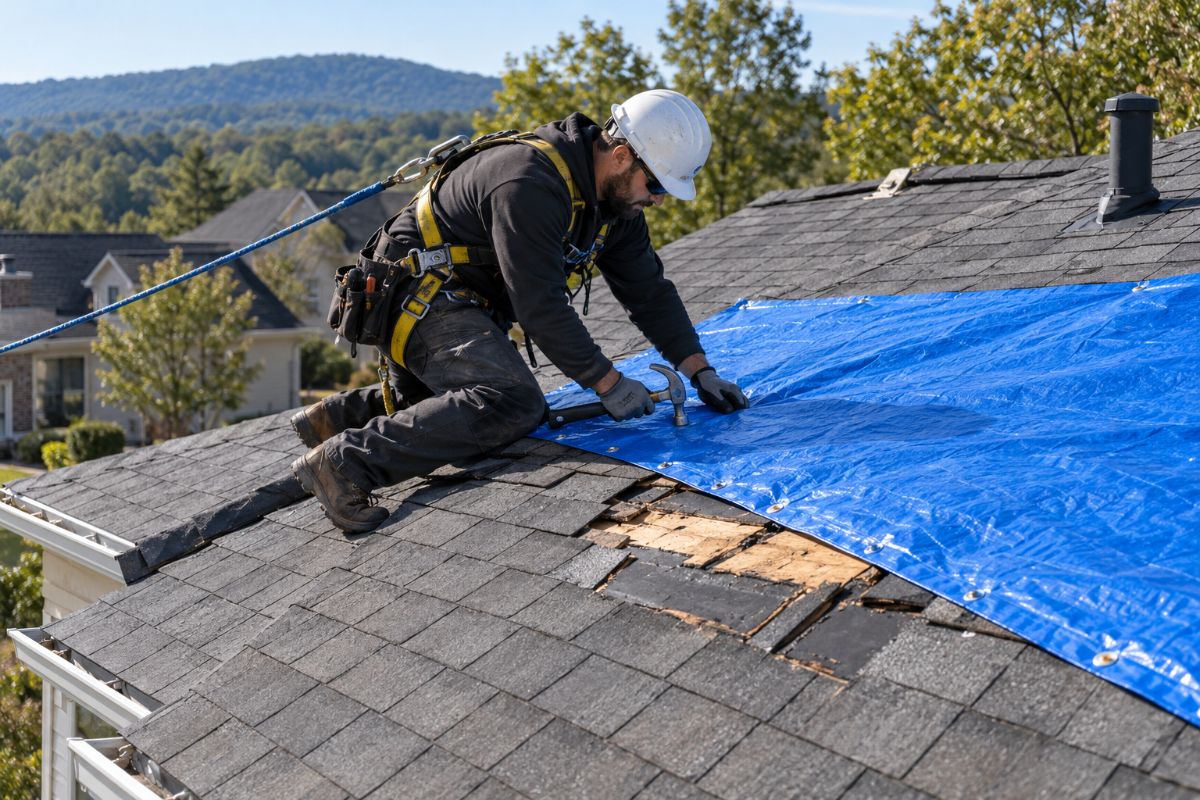
Professional tarping begins with evaluating the roof’s condition and determining whether the work can be performed safely.
The process involves identifying damaged areas, selecting a suitable temporary covering, and securing it to help minimize further weather exposure. Each step requires careful consideration of the roof’s structure, weather conditions, and existing damage to provide effective temporary protection.
Assessing the Damaged Area
The contractor considers the roof’s structural condition, exposed materials, slope, surrounding obstacles, and potential access hazards.
A tarp should not be installed on an unsafe roof before the structure has been assessed. Weather conditions may also require installation to be postponed.
Selecting and Securing the Covering
The roofing professional selects a suitable temporary covering and installation method based on the damaged area.
Proper positioning and secure attachment matter because poorly installed coverings can shift, allow water beneath their edges, or become damaged in subsequent weather.
Installation methods depend on the roof and must avoid creating unnecessary additional damage.
Checking the Temporary Protection
Once installation is complete, the contractor may inspect the covering’s position, attachment, and coverage of vulnerable areas.
Homeowners should monitor for interior leaks from safe locations and report new damage. They should never climb onto a tarp to inspect or adjust it themselves.
How Long Can a Roof Tarp Remain in Place?
There is no universal period for which every emergency roof tarp will remain effective. Performance depends on the tarp material, installation method, roof condition, wind exposure, rainfall, and sunlight.
A tarp that remains securely positioned may still deteriorate or develop openings over time. Strong weather can also damage or displace temporary coverings.
Homeowners should arrange permanent repair planning promptly rather than assuming a tarp provides lasting protection. If new leakage develops, a roofing professional should reevaluate the covering and underlying damage.
What Happens After Emergency Roof Tarping?
Temporary protection is generally one stage of a broader roofing response. Once immediate exposure is addressed, the next step is determining what permanent work is required.
A professional roof inspection can help identify the extent of the damage and whether repairs or replacement are necessary. Addressing underlying roofing problems is essential for restoring the roof’s protective function and reducing the risk of future water intrusion.
Professional Damage Inspection
A roof inspection may examine shingles, flashing, underlayment, accessible decking, and other components affected by the storm.
Inspection findings help establish whether damage is localized or extends into underlying roofing materials.
Repair or Replacement Decisions
Some roofs require replacement of individual shingles, flashing, or damaged sections. Others may need more extensive work when deterioration or structural damage affects larger areas.
Division Kangaroof provides residential roof repair services and evaluates whether repair or replacement is suitable for the roof’s condition.
Removing Temporary Coverings
When permanent roofing work begins, the temporary covering must be removed safely. Contractors can then address damaged materials and restore the affected roofing system.
Removing a tarp prematurely may expose the home to additional rainfall.
Does Homeowners Insurance Cover Emergency Roof Tarping?
Emergency tarping expenses may be covered when the underlying storm damage is covered by a homeowner’s insurance policy. However, coverage depends on policy terms, exclusions, deductibles, and claim circumstances.
The National Association of Insurance Commissioners advises homeowners to document storm damage and keep records of temporary repairs. It also recommends contacting the insurer to clarify coverage.
Homeowners should retain receipts, photographs, and repair documentation while communicating with their insurance provider.
A roofing contractor may assist with damage documentation, but the insurer determines claim coverage and payment.
When to Contact an Emergency Roofing Professional
Homeowners should seek professional guidance when storm damage leaves roofing materials exposed, creates visible openings, causes active leaks, or raises concerns about structural stability.
A professional can help determine whether emergency tarping is necessary or whether another corrective approach is more appropriate.
For North Georgia homeowners, timely assessment is particularly important when additional rainfall is expected before repairs can be completed.
Final Thoughts
Emergency roof tarping can help protect storm-damaged roofs when permanent repairs cannot be completed immediately. It may be appropriate for missing shingles, exposed roofing components, storm-created openings, or certain active leaks.
However, temporary coverings cannot restore structural integrity or replace a permanent roofing solution. Their effectiveness depends on proper installation, the condition of the roof, and subsequent weather exposure.
Division Kangaroof offers emergency tarping, storm damage assessments, and residential roof repair services in North Georgia. Homeowners concerned about storm damage can contact the company to discuss an inspection and appropriate next steps.
Frequently Asked Questions
Is emergency roof tarping always necessary after a storm?
No. Tarping is generally considered when damage exposes vulnerable roofing areas or creates a risk of further water intrusion. Minor problems may require only targeted repairs.
Can a roof tarp stop an active leak?
A properly installed tarp may reduce water entering through a damaged roof area. However, it cannot guarantee that all leakage will stop, particularly when multiple entry points exist.
Can homeowners install a roof tarp themselves?
Climbing onto a storm-damaged roof presents serious fall and structural hazards. Professional assessment and installation are safer options, especially when conditions remain unstable.
Can a damaged roof remain covered until repairs begin?
A tarp may provide interim protection, but its condition can change with weather and exposure. Permanent repairs should be arranged promptly.
Will insurance pay for emergency roof tarping?
Some policies cover reasonable temporary protection following a covered loss. Homeowners should confirm the details with their insurer and retain documentation of related expenses.